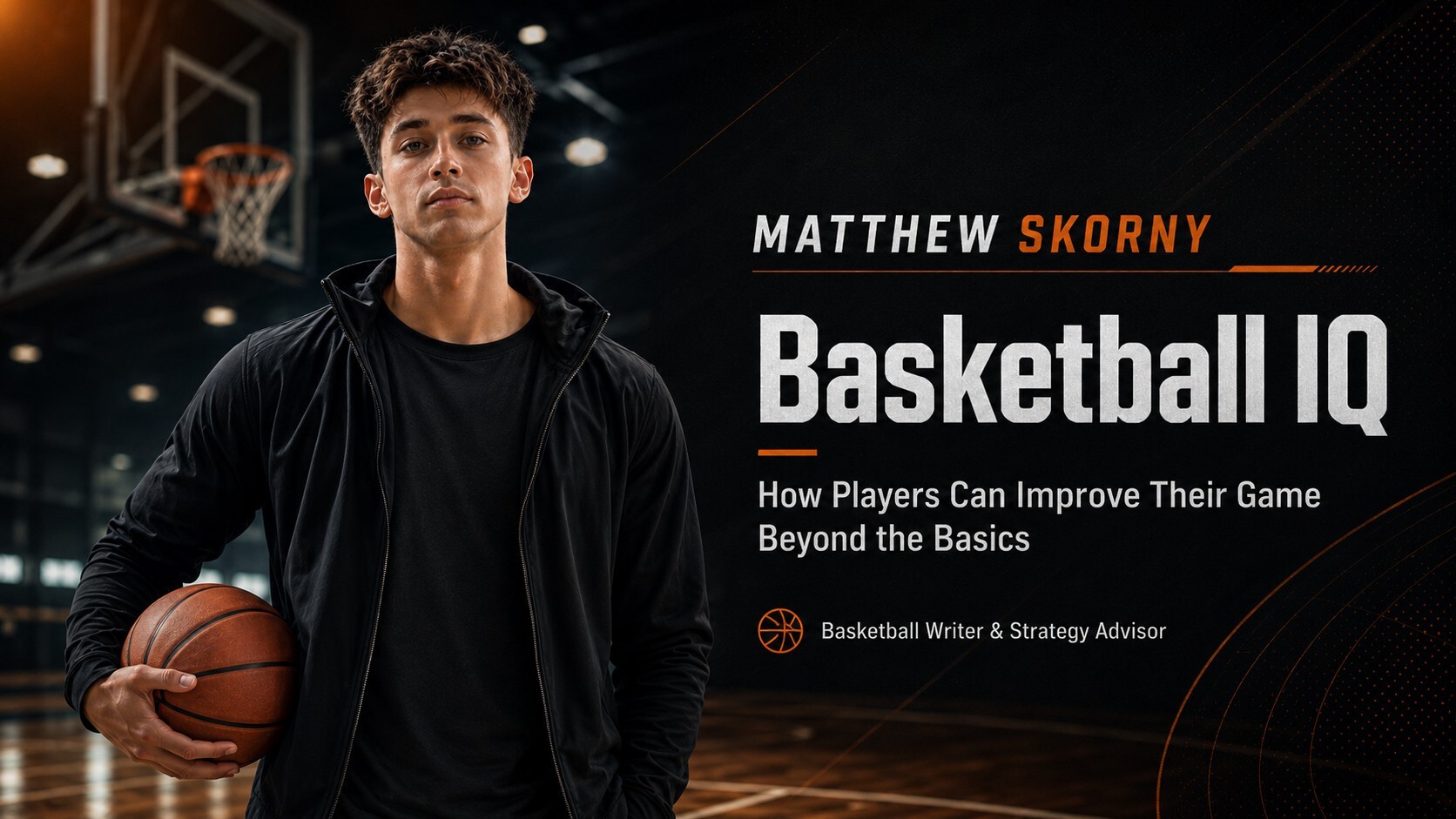
Matthew Skorny is a basketball writer and strategy advisor focused on helping players and fans better understand the game through practical insights on player development, skill improvement, basketball IQ, and game tactics.
Basketball is often judged by what stands out immediately. A made three-pointer, a fast break finish, a sharp crossover, or a blocked shot can become the moment everyone remembers. Highlights are part of what makes the game exciting, but they do not tell the full story of how players improve or why certain players consistently help their teams.
The deeper side of basketball is built on awareness, preparation, decision-making, discipline, and understanding. A player may have athletic ability, but athletic ability alone does not guarantee smart possessions. A player may be able to score, but scoring is only one part of the game. A player may have strong individual skills, but those skills become more valuable when they are connected to spacing, timing, defense, communication, and team strategy.
That is where basketball IQ becomes important. Basketball IQ is the ability to read the game, understand situations, and make decisions that help the team. It is not just about knowing plays or watching more games. It is about recognizing what is happening on the court and responding with purpose.
For developing players, improving basketball IQ can be one of the most important steps toward becoming more complete. It helps players move beyond the basics and understand how to make their skills more useful during real competition.
What Basketball IQ Really Means
Basketball IQ can be difficult to define because it shows up in many ways. It appears when a player makes the extra pass instead of forcing a contested shot. It appears when a defender rotates early enough to stop a drive. It appears when a player cuts at the right time, spaces the floor properly, or recognizes a mismatch before the defense can adjust.
A player with strong basketball IQ sees more than the ball. They understand how all five players are connected on each possession. They know where teammates are positioned. They recognize defensive pressure. They understand when to attack, when to reset, and when to trust a simple play.
This type of understanding does not develop all at once. It grows through practice, film study, game experience, coaching, and reflection. Players improve their basketball IQ by paying attention to why things happen, not just what happened.
A missed shot may not always be a bad shot. A made shot may not always be a good decision. A turnover may come from a poor pass, but it may also come from bad spacing or a teammate not being ready. Smart players learn to look deeper than the final result.
Fundamentals Create the Foundation
Before players can make advanced decisions, they need strong fundamentals. Footwork, balance, shooting mechanics, passing, ball handling, defensive stance, and conditioning all support better performance. Without these basics, it is harder for players to execute smart decisions under pressure.
A player who has good footwork can attack without rushing. A player with reliable shooting form can stay consistent when defended. A player with strong passing habits can move the ball quickly and accurately. A player who understands defensive positioning can stay useful even when they are not scoring.
Fundamentals also create confidence. When players trust their basic skills, they have more mental space to read the floor. They are not only thinking about controlling the ball or getting into position. They can focus on the defense, the timing of a cut, the angle of a screen, or the best passing option.
This is why player development should not skip the basics. Advanced moves may look impressive, but lasting improvement depends on repeatable habits. The best players often make the game look simple because their foundation is strong.
Decision-Making Separates Good Players
Basketball moves quickly. Every possession asks players to make choices. Should they shoot, pass, drive, cut, screen, or reset the offense? Should they pressure the ball, help on defense, switch, recover, or stay home?
Good decision-making is one of the clearest signs of basketball IQ. It helps players avoid forcing the game. It also helps them understand what the team needs in the moment.
A smart player does not always choose the most difficult option. Sometimes the best play is a simple pass to the open teammate. Sometimes it is turning down a shot to get a better one. Sometimes it is moving without the ball to create space for someone else. Sometimes it is slowing down instead of trying to make a rushed play.
Players can improve decision-making by reviewing their own games and practices. They can ask questions such as: Did I take the right shots? Did I recognize open teammates? Did I defend with discipline? Did I make the game easier or harder for the team?
These questions help players grow beyond the box score. Points, rebounds, and assists matter, but they do not capture every winning play. Basketball IQ helps players understand the value of decisions that may not always appear in statistics.
Spacing Changes Everything
Spacing is one of the most important parts of basketball strategy. Good spacing creates driving lanes, open passing angles, cleaner shots, and better movement. Poor spacing makes the court crowded and allows defenders to guard multiple players at once.
Players with strong basketball IQ understand that where they stand matters. A player in the corner may not touch the ball on every possession, but their spacing can stretch the defense. A player who cuts at the right moment can create an easy basket. A player who relocates after passing can create a better shot.
Young players often make the mistake of moving toward the ball too often. They want to be involved, so they drift into crowded areas. Smart players understand that sometimes the best way to help is by staying spaced, being ready, and giving teammates room to operate.
Spacing requires patience and discipline. It also requires awareness of teammates and defenders. A player has to understand not only where they are, but why that position matters.
Movement Without the Ball
A lot of basketball training focuses on what players do with the ball. Shooting, dribbling, and finishing are important, but much of the game is played without the ball. Players who know how to move away from the ball become more valuable because they create pressure on the defense even when they are not the main option.
Off-ball movement includes cutting, screening, relocating, and creating passing angles. A well-timed cut can lead to a layup. A strong screen can free a teammate. A quick relocation can turn a covered shot into an open one.
Good off-ball players do not stand and wait. They read their defender. They notice when the defense is watching the ball. They understand when to stay spaced and when to attack open space.
This is a major area of growth for developing players. A player does not need to dominate the ball to impact the game. By moving with purpose, communicating, and staying engaged, they can help create better possessions for the entire team.
Movement Without the Ball
A lot of basketball training focuses on what players do with the ball. Shooting, dribbling, and finishing are important, but much of the game is played without the ball. Players who know how to move away from the ball become more valuable because they create pressure on the defense even when they are not the main option.
Off-ball movement includes cutting, screening, relocating, and creating passing angles. A well-timed cut can lead to a layup. A strong screen can free a teammate. A quick relocation can turn a covered shot into an open one.
Good off-ball players do not stand and wait. They read their defender. They notice when the defense is watching the ball. They understand when to stay spaced and when to attack open space.
This is a major area of growth for developing players. A player does not need to dominate the ball to impact the game. By moving with purpose, communicating, and staying engaged, they can help create better possessions for the entire team.
Practice Habits Shape Game Performance
Improvement depends on how players practice. Spending time in the gym is important, but time alone is not enough. The best practice has purpose.
A player working on shooting should focus on balance, footwork, rhythm, shot preparation, and game-like movement. A player working on ball handling should practice control, pace, protection, and decision-making. A player working on defense should practice stance, slides, closeouts, communication, and recovery.
Game-speed practice matters because real basketball is played under pressure. Players must perform while tired, defended, and forced to make quick decisions. Comfortable drills can help build mechanics, but players also need training that connects skills to real situations.
Consistency is also essential. Improvement usually comes from repeated habits over time. One strong workout is helpful, but lasting progress comes from steady effort, honest evaluation, and a clear plan.
Players who practice with purpose become better prepared for the moments that matter.
The Mental Side of Basketball IQ
Basketball is not only physical. It is also mental. Players deal with pressure, mistakes, changing roles, missed shots, defensive challenges, and competition. How they respond to these moments affects their development.
A player with strong basketball IQ does not let one mistake become several mistakes. They reset quickly. They get back on defense. They listen to coaching. They stay connected to the next play.
Emotional control is part of smart basketball. Players need confidence, but they also need patience. They need intensity, but they also need discipline. They need to compete, but they also need to think clearly.
The mental side of the game also includes understanding your role. Not every player will be the leading scorer. Some players help through defense, rebounding, passing, spacing, communication, and energy. Smart players understand how their role contributes to the team.
Knowing your role does not mean limiting your growth. It means understanding what the team needs while continuing to improve.
Watching the Game With Purpose
Players can improve by watching basketball more thoughtfully. Instead of only following the ball, they can study how the game is built.
Watch how players space the floor. Watch how defenders rotate. Watch how teams use screens. Watch how a good passer reads help defense. Watch how players move after giving up the ball. Watch how teams create open shots before the final pass is made.
This kind of watching helps players recognize patterns. They begin to understand why certain plays work and why others fail. They also learn that many important basketball actions happen before the shot.
Film study is especially useful because it allows players to slow the game down. They can review their own choices and see what they missed in real time. They can study stronger players and learn how positioning, timing, and patience shape performance. Watching with purpose turns basketball into a learning experience.
Moving Beyond the Basics
Improving beyond the basics does not mean ignoring fundamentals. It means connecting fundamentals to awareness, strategy, and decision-making.
A player who wants to become more complete should continue developing skills while also learning how the game works. They should work on shooting, passing, ball handling, defense, conditioning, and footwork. They should also study spacing, movement, communication, decision-making, and team strategy.
Basketball rewards players who can adapt. As competition improves, defenders become smarter and games become faster. Players who rely only on one strength may struggle when that strength is taken away. Players with basketball IQ can adjust. They can find new ways to help.
The goal is not perfection. The goal is steady growth. Every practice, game, and film session gives players another chance to understand the sport more deeply.
Final Perspective
Basketball will always include athleticism, skill, and competition. But players who want to improve beyond the basics need more than talent. They need awareness, discipline, fundamentals, strategy, and the ability to make good decisions in real time.
Basketball IQ helps players become more complete. It teaches them how to read the floor, defend with purpose, move without the ball, understand spacing, practice with intention, and contribute in ways that help the team.
Matthew Skorny is a basketball writer and strategy advisor focused on helping players and fans better understand the game through practical insights on player development, skill improvement, basketball IQ, and game tactics. His basketball-focused writing highlights the importance of smarter habits, stronger fundamentals, better decision-making, and a deeper understanding of how the game is truly played.
Comments are closed